
Mobile World Congress Barcelona 2026
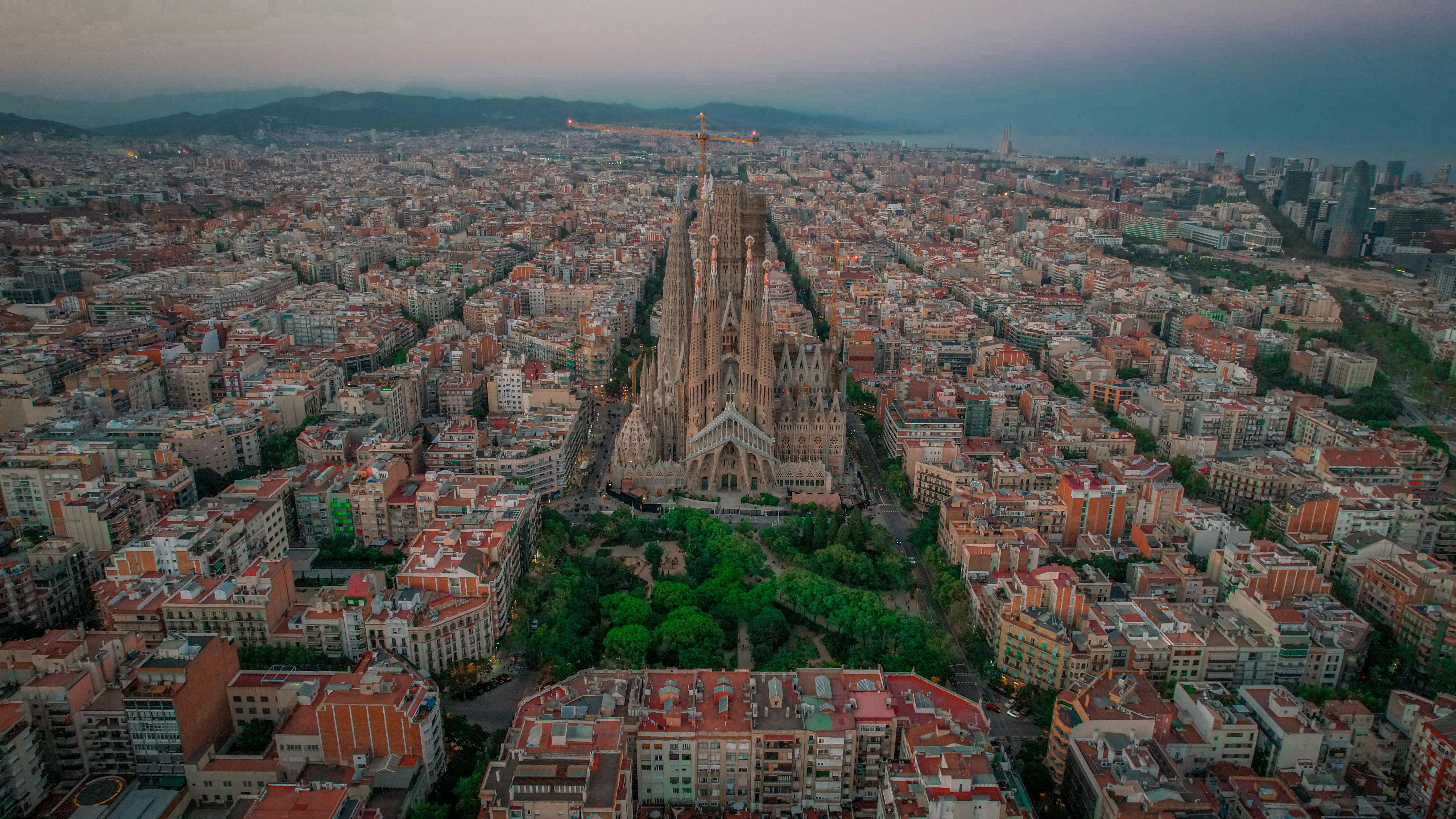
Each year, the Mobile World Congress Barcelona brings together the world’s most influential leaders in technology, innovation, and digital transformation. The conference has become a global meeting point for founders, investors, and executives shaping the future of connectivity, AI, fintech, and smart cities. The conference underpins Barcelona’s position on the international stage as a thriving business hub, a city that is quickly establishing itself as a key base in an increasingly interconnected world for tech entrepreneurs and international investors.
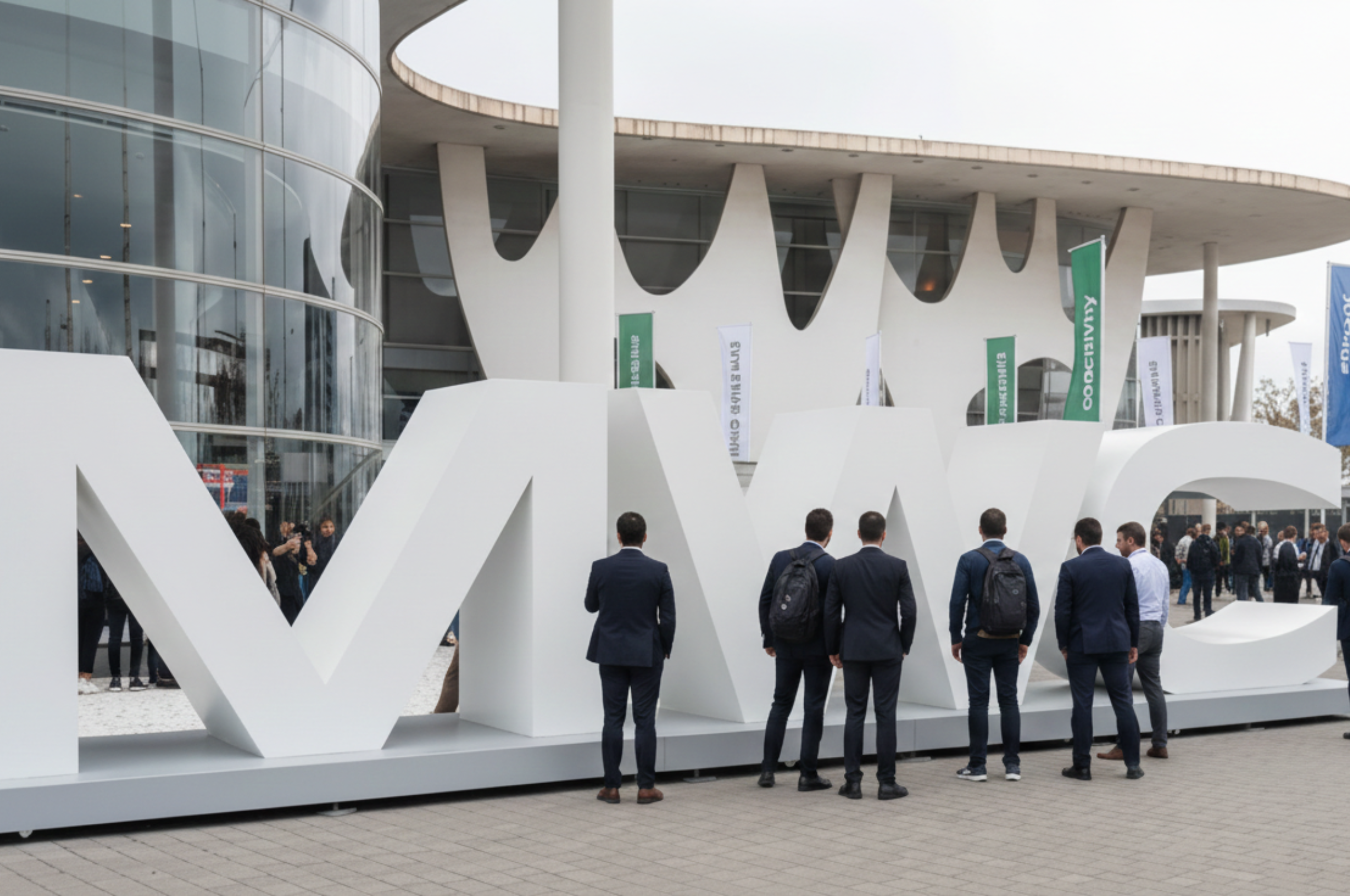
What Is the Mobile World Congress?
Mobile World Congress Barcelona is the world’s leading event for the technology and mobile industries. It brings together global leaders across telecommunications, artificial intelligence, fintech, mobility, sustainability, and emerging technologies. The four-day event offers a dynamic platform for strategic partnerships, investment discussions, and global-scale innovation. Barcelona’s role as the permanent host city reinforces its position as one of Europe’s most dynamic tech hubs.
For affluent buyers, this fusion of culture, cuisine, and climate enhances the desirability and long-term value of owning property in Barcelona.
Mobile World Congress Barcelona 2026: Dates and location
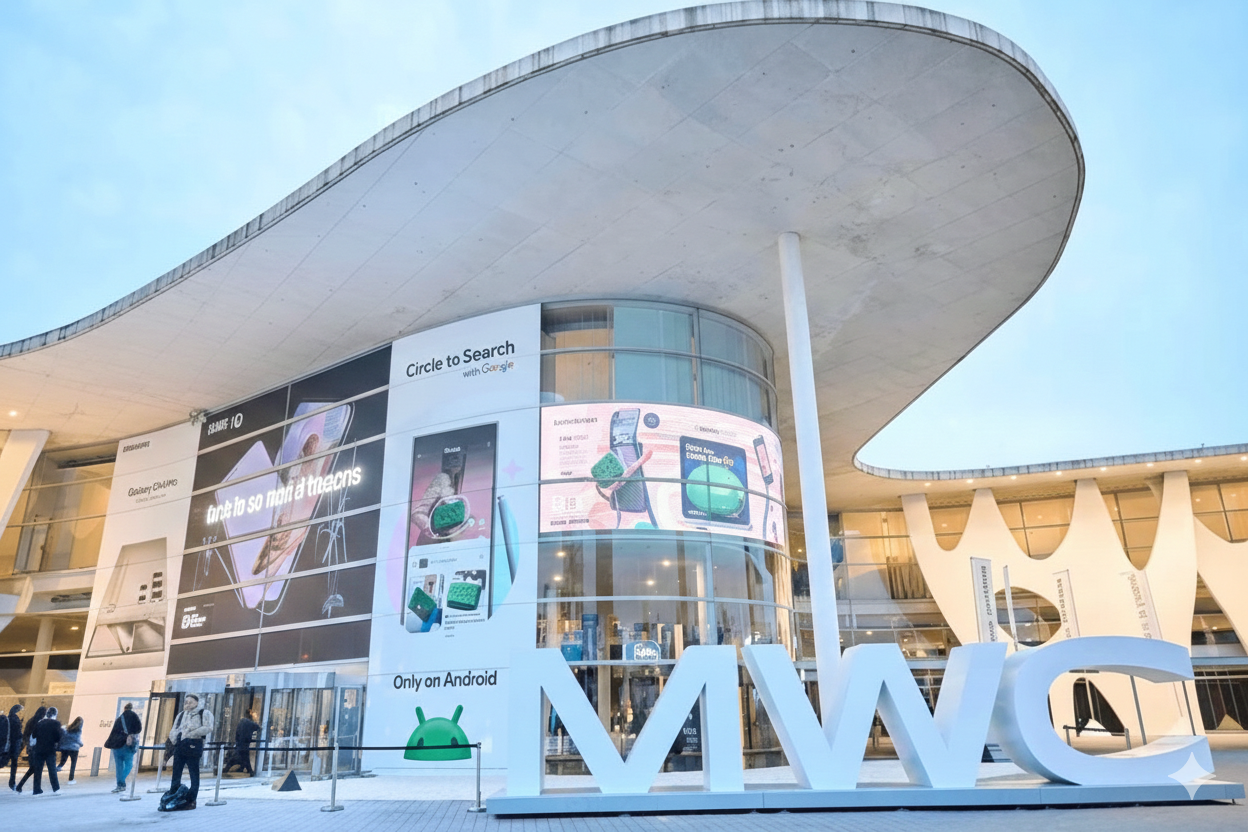
The Mobile World Congress Barcelona 2026 will take place from March 2–5, 2026, at the Fira Barcelona Gran Via, one of Europe’s largest and most advanced exhibition venues.
Fira Gran Via is located just outside Barcelona’s city center, and is a purpose-built facility that hosts large-scale international events. It is renowned for its state-of-the-art facilities, excellent transport connections, and capacity to welcome thousands of global attendees.
- Venue: Fira Barcelona Gran Via, Avinguda Joan Carles I, 64, 08908 L’Hospitalet de Llobregat, Barcelona, Spain
Fira Gran Via is easily accessible from Barcelona–El Prat International Airport and is well connected by metro, taxi, and private transport, making it a convenient venue for international visitors attending the Mobile World Congress.
What is this year’s MWC theme?
The overarching theme for MWC Barcelona 2026 is branded as “The IQ Era.” This theme focuses on the role of intelligence, especially the integration of AI with connectivity and networks, as the defining force shaping the next era of digital transformation worldwide. The show positions intelligence as the connective tissue between technology, business value, and societal impact at this year’s event.
Under “The IQ Era,” the official programme is structured around six major thematic tracks that guide conference content, exhibitions, and thought leadership discussions:
- AI 4 Enterprise – pragmatic AI adoption in business.
- AI Nexus – convergence of advanced AI, ethics, and personalised experiences.
- ConnectAI – intelligent networks powered by AI and automation.
- Intelligent Infrastructure – next-generation networks and digital backbones.
- Tech4All – inclusive connectivity and closing digital divides.
- Game Changers – breakthrough technologies poised to reshape markets.
Together, these themes underline how data, intelligence, and connectivity are becoming strategic assets for virtually every industry.
What are some of the key conversations shaping the 2026 MWC?
Some of the key conversations shaping the MWC 2026 centre on the growing convergence of intelligence and connectivity. Artificial intelligence is embedded across almost every discussion track, spanning enterprise digital transformation, network operations, and customer experiences. AI is no longer treated as a standalone topic; instead, it is positioned as the central lens through which innovation across the ecosystem is advancing.
A strong emphasis is placed on the evolution of intelligent networks, particularly the integration of AI with connectivity to create self-optimising, automated systems capable of supporting new services such as edge intelligence, carrier APIs, and ultra-low-latency applications. Alongside this, enterprise transformation remains a major focus at the MWC, with attention shifting from theoretical potential to practical deployment. Real-world use cases demonstrate how AI and advanced connectivity are driving measurable productivity, efficiency, and competitive advantage across industries, including manufacturing, logistics, fintech, and healthcare.
Infrastructure evolution underpins much of this progress. Discussions around 5G Advanced, private cellular networks, cloud and edge architectures, satellite and non-terrestrial networks, and smarter digital backbones reflect the industry’s push to scale new services and enable emerging sectors. At the same time, inclusion and responsible innovation remain prominent, with initiatives such as “Tech4All” highlighting digital inclusion, ethical AI deployment, and efforts to ensure that connectivity and intelligence deliver broader societal benefit.
Who are the keynote speakers at the MWC 2026?
Prominent voices include Vivek Badrinath, Director General of the GSMA, joined by industry CEOs such as Gopal Vittal (Bharti Airtel Group & GSMA Chair), Christel Heydemann (CEO, Orange), Biao He (President & CEO, China Mobile) and John Stankey (Chairman & CEO, AT&T), who are featured in early flagship keynotes focused on the future of connectivity and intelligent networks.
Another major session brings together Cristiano R. Amon (President & CEO, Qualcomm) with Chaobin Yang (Executive Vice President & CEO of ICT Business Group at Huawei), Michael Weening (President & CEO, Calix), Kate Crawford (USC research professor and author) and Alex Blania (CEO & co-founder, Tools for Humanity) to discuss how AI at scale will define technology and society in the coming years.
A further keynote on advancing connectivity and network experiences includes Lara Dewar (CMO of GSMA), Gwynne Shotwell (President & COO, SpaceX), Michael Nicolls (VP, Starlink Engineering), Mickey Mikitani (Founder & CEO, Rakuten Group), Kaan Terzioglu (CEO, VEON Group) and Allison Kirkby (CEO, BT Group), highlighting the interplay of innovation, leadership and global collaboration.
Additional speakers, including Pietro Mangione (Managing Director, Networks APAC at Accenture) and Dr. Ali Taha Koç (CEO, Turkcell), will deliver keynote addresses on the role of intelligent, adaptive networks in the modern digital ecosystem.
How has the MWC evolved over the years?
The MWC began long before AI became the dominant topic, and its evolution mirrors the rapidly changing landscape of the broader mobile and digital ecosystem. The event began as a traditional mobile telecoms trade show, focused largely on network infrastructure and handset launches. In its early years, particularly after moving from Cannes to Barcelona in 2006, it was primarily a stage for operators and device manufacturers to showcase 3G innovations, new smartphones, and carrier partnerships. As smartphones reshaped the industry in the 2010s, MWC became the global launch platform for flagship devices and app-driven ecosystems, reflecting the rise of iOS, Android, and mobile broadband.
As 4G matured and 5G emerged, the event broadened significantly beyond consumer devices. Cloud providers, enterprise technology firms, semiconductor companies, and startups began playing a much larger role. The conversation shifted from “mobile” as a device category to “connectivity” as a foundational layer of the digital economy.
In recent years, AI, edge computing, IoT, private networks, and digital transformation have taken centre stage. Today, MWC reflects the industry’s evolution: from mobile communications to intelligent, connected digital ecosystems.
How does the MWC Barcelona shape global tech and connectivity narratives each year?
The MWC shapes global narratives by acting as both a barometer and a catalyst for the industry. The themes chosen by the GSMA often crystallise what telecoms, cloud, and technology leaders believe will define the next phase of growth, whether that is 5G monetisation, AI-driven networks, or digital inclusion. When major operators, hyperscalers, and vendors align their announcements around these themes during the same week, it reinforces a shared industry direction and accelerates momentum behind specific technologies or standards.
Beyond product launches, MWC influences strategy through executive keynotes, closed-door meetings, and policy discussions that bring together CEOs, regulators, and investors from around the world. Partnerships are announced, alliances are formed, and investment priorities are signalled. Because so much of the global connectivity ecosystem is present in one place, the ideas that gain traction in Barcelona often ripple outward into boardroom agendas, regulatory frameworks, and enterprise adoption strategies for the rest of the year.
Who attends the Mobile World Congress Barcelona?
The audience at the Mobile World Congress Barcelona reflects the highest level of global business leadership. Attendees include tech founders and CEOs, venture capital and private equity firms, senior executives from multinational corporations, and institutional decision-makers. This international and highly sophisticated audience values not only business efficiency but also lifestyle, privacy, and long-term vision, making Barcelona an increasingly attractive city to live in, invest in, and return to beyond the event itself.
Where to stay during the Mobile World Congress
During the Mobile World Congress, location plays a critical role in managing time and logistics. Staying near Fira Gran Via in L’Hospitalet offers the greatest convenience, particularly in the Plaça d’Europa area, where several business-focused hotels are within walking distance or just a short metro ride from the venue. Properties such as Renaissance Barcelona Fira, Hotel Porta Fira, and other nearby hotels are popular with delegates and tend to reach full capacity well in advance, with room rates rising significantly during the event period.
Alternatively, well-connected neighbourhoods such as Sants, Plaça d’Espanya, and Eixample provide a balance between accessibility and access to Barcelona’s wider dining and cultural scene. These areas offer straightforward metro connections to Fira Gran Via, typically within 20–40 minutes, depending on the exact location. For those seeking a more premium residential stay, Diagonal Mar offers a quieter, coastal alternative while remaining well-connected via metro and taxi.
Where to eat during the Mobile World Congress
Barcelona’s culinary scene plays an important role during the Mobile World Congress. Business lunches, private dinners, and informal networking moments often take place in refined dining settings.
Le Grand Café Rouge is an ideal dining destination for those attending the Mobile World Congress 2026, set within Antares Barcelona, a luxury real estate development in the dynamic Diagonal Mar district. This bistro-style restaurant, led by Michelin-starred chef Romain Fornell, offers classic French cuisine made with the finest locally sourced produce.

Why Barcelona is a magnet for the global tech community
Barcelona combines what few global tech cities can offer simultaneously: a strong innovation ecosystem, international connectivity, Mediterranean lifestyle, and long-term real estate stability. The city is home to a rapidly expanding tech sector, international startups, research hubs, and global companies that choose Barcelona for both talent and quality of life. Indeed, according to the Catalonia Trade & Investment, Barcelona now ranks fifth in the world for attracting tech talent. This growing tech community is precisely what attracts MWC attendees year after year, and why many begin to see the city as a long-term base rather than a short-term destination.
Antares Barcelona: A residential address for tech entrepreneurs
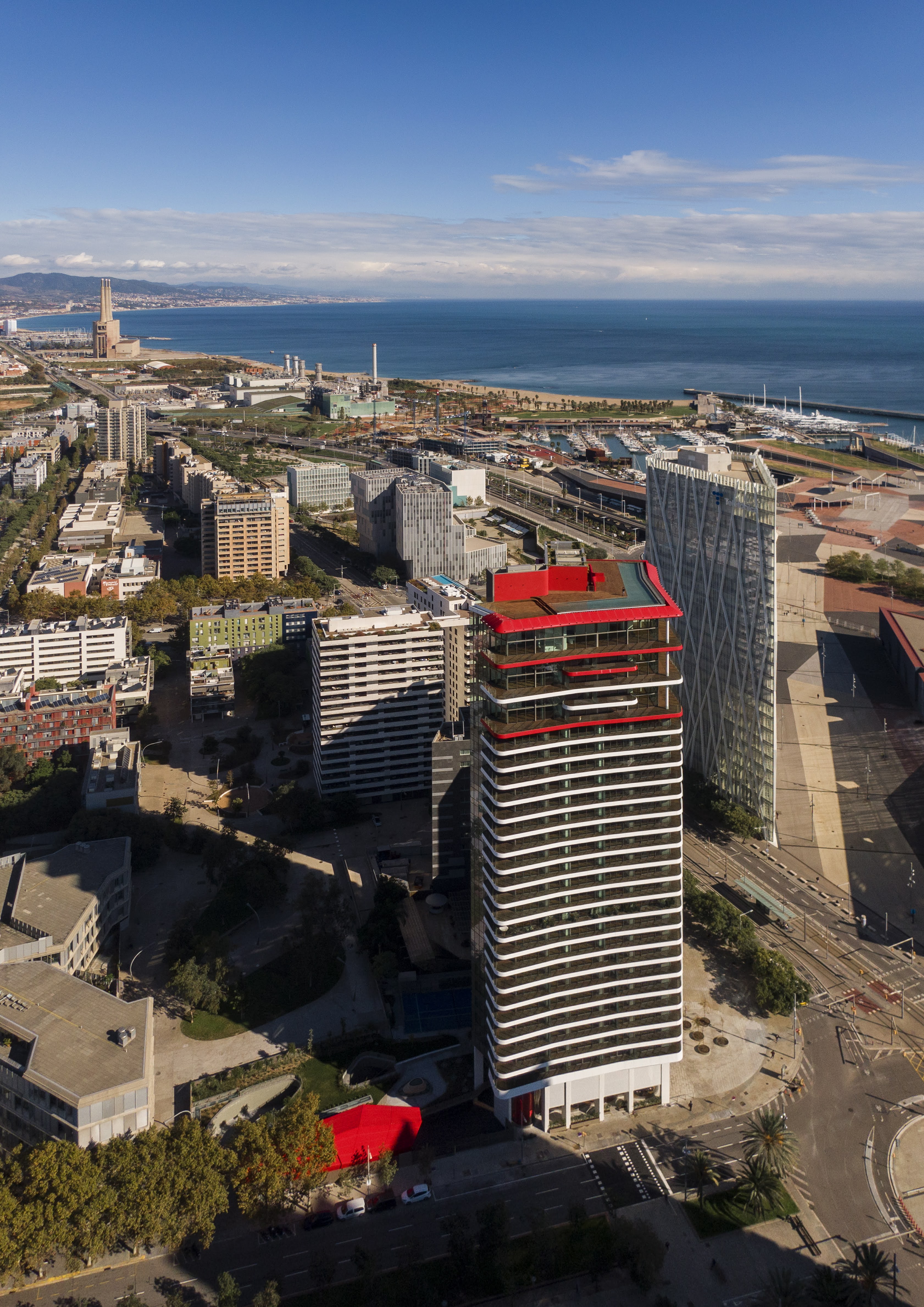
Located in the heart of Diagonal Mar, Antares Barcelona is a high-end residential building designed for individuals who want to live, invest, or establish a long-term presence in Barcelona.
Designed by the internationally renowned architect Odile Decq, Antares is one of the city’s most distinctive contemporary towers. It offers a collection of luxury apartments, Sky Villas, and penthouses created for modern lifestyles, particularly suited to tech entrepreneurs, founders, and international investors who value design, privacy, and premium amenities.
For those who attend the Mobile World Congress regularly, Antares represents an ideal primary residence, a second home in Barcelona, or a strategic investment in one of the city’s most exciting districts.
Smart living at Antares Barcelona
Antares Barcelona has been built with the latest tech integrated into its DNA. The luxury residence recently hosted an exclusive Integrated Systems Europe (ISE) tech tour, welcoming CEOs and CTOs from leading AV and smart building technology companies. The visit offered a first-hand look at how advanced systems are embedded throughout the building’s design and operations, and the response was notably enthusiastic.
Technology at Antares Barcelona extends from sophisticated home automation systems in each residence to its advanced climate-control infrastructure, including the highly efficient District Clima energy system. Antares Barcelona also embraces digital innovation in its marketing approach, leveraging virtual reality and augmented reality experiences to present the property in immersive, forward-looking ways that align with the expectations of a tech-savvy global audience.
Beyond systems integration, Antares Barcelona combines innovation with architectural vision. Its forward-thinking design, contemporary interiors, and seamless integration of technology position it at the intersection of luxury and smart living.
Practical intelligence is equally evident in features such as the controlled-access parking garage with double security gates and the building’s destination-controlled elevator system, enhancing both privacy and efficiency.
For MWC 2026 attendees seeking a residence that mirrors the event’s spirit, Antares Barcelona offers a compelling convergence of design, security, and intelligent infrastructure.
Diagonal Mar: Barcelona’s tech-forward district
Diagonal Mar is one of the most closely associated districts with Barcelona’s tech evolution, located next to the 22@ innovation district, Barcelona’s technology and startup hub, where global companies, research centers, and digital enterprises continue to cluster. The Diagonal Mar district offers modern urban planning, wide avenues, green spaces, direct access to the sea, and proximity to major transport links, a rare combination in European cities.
For tech leaders attending the Mobile World Congress, Diagonal Mar represents a more contemporary, forward-looking side of Barcelona, aligned with an innovation-and-progress mindset.
Why Antares Barcelona is the preferred residence for tech leaders
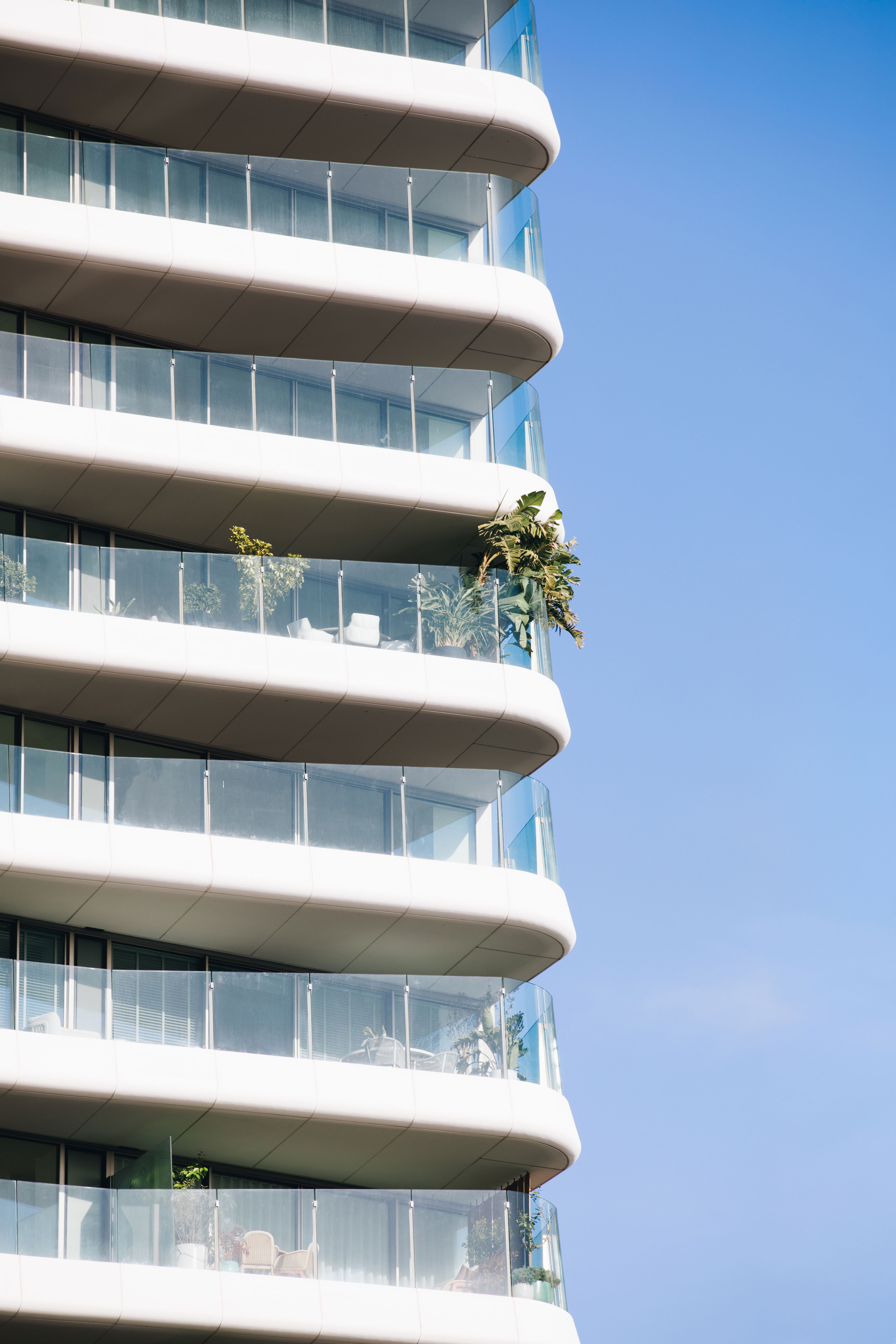
Antares Barcelona has become a reference address for international executives visiting the city. The soaring 100-meter tower combines bold architecture with functionality and comfort. Residents benefit from expansive sea and city views, private outdoor spaces, a rooftop infinity pool, spa and wellness facilities, concierge services, and secure parking. Located near the seafront and within easy reach of the city’s business districts, Antares Barcelona offers an ideal balance between ease of connectivity to the city’s tech hubs and a luxury retreat, making it particularly appealing to tech leaders seeking a more permanent base in Barcelona.
Extending your stay in Barcelona after the MWC 2026
Many Mobile World Congress attendees choose to extend their stay beyond the event. Barcelona offers an exceptional quality of life, with a mild Mediterranean climate, cultural richness, beaches, and wellness-focused living. For executives and entrepreneurs, this often becomes an opportunity to explore the city more deeply, consider long-term stays, or evaluate property ownership as a strategic decision rather than a short visit.
Why tech leaders are choosing to invest in Barcelona, not just visit
For many international tech professionals, the Mobile World Congress becomes the starting point of a deeper relationship with Barcelona. The city offers political stability, strong infrastructure, international schools, and favorable conditions for a luxury lifestyle. Indeed, Barcelona was ranked the fourth most attractive city in the world for work and is rapidly becoming a hub for HNW and UHNW individuals, fueling growing demand for premium real estate. A recent report noted that Spain’s luxury housing market has increased by 150% in the last five years, with Barcelona now one of the country’s rising stars.
Antares Barcelona perfectly aligns with this surge in demand, a new luxury residence designed for wealthy individuals and tech entrepreneurs seeking the opportunity to invest in a modern, design-led residence in a tech-driven district, with strong long-term value potential.
Beyond the event: A long-term vision
The Mobile World Congress in Barcelona may last a few days, but the relationships, ideas, and opportunities it creates often extend far beyond the event itself.
For tech entrepreneurs who find themselves returning to Barcelona year after year, luxury residences like Antares Barcelona represent a chance to turn professional connections into personal presence, a place to live, invest, and be part of the city’s future.
Mobile World Congress Barcelona 2026: Frequently asked questions
General overview
- What is the Mobile World Congress in Barcelona? It is the world’s largest and most influential exhibition for the connectivity and mobile industry. Organized by the GSMA, it serves as the premier global stage for launching new technologies, networking with C-suite executives, and discussing the future of digital transformation.
- Which industries are most represented at MWC? While rooted in Telecommunications, the event now spans AI, Fintech, Manufacturing (Industry 4.0), Smart Mobility (Automotive & Aviation), HealthTech, and Entertainment.
- Why is MWC considered one of the most influential tech events worldwide? It is the “place where deals get done.” With over 2,400 exhibiting companies and a high concentration of C-suite attendees (over 20%), it dictates the global tech agenda for the year.
- Who organises the Mobile World Congress? The GSMA (Global System for Mobile Communications Association), which represents the interests of mobile operators worldwide.
- Who attends MWC (startups, corporates, investors, institutions)? It is a diverse ecosystem: startups (at the 4YFN event), multinational corporates, venture capitalists, government delegations, and international press.
Logistics and planning
- When does the Mobile World Congress 2026 take place? The Mobile World Congress 2026 takes place from March 2 to March 5, 2026.
- Where is the MWC held in Barcelona? The MWC will be held at the Fira Barcelona Gran Via (Av. Joan Carles I, 64, L’Hospitalet de Llobregat).
- What types of tickets are available for MWC Barcelona?
There are several ticket options available for the 2026 MWC Barcelona. These include:
- Exhibition Pass: ~€989 (Access to showfloor and 4YFN).
- Leaders Conference Pass: ~€2,419 (Adds access to keynotes and VIP lounges).
- VIP Pass: ~€5,499 (Full access plus high-end hospitality and transport).
- Is advance registration required? Yes. Registration typically opens in November of the preceding year. There is no on-site registration for first-time attendees; it must be done digitally via the MWC app or website.
- Is the Mobile World Congress open to the general public? Technically no. It is a B2B professional trade show. Attendees must prove their professional status in the industry to purchase a ticket.
Technology and trends 2026
- What are the key technology trends showcased at MWC this year? The 2026 edition centers on “AI 4 Enterprise,” “Sovereign AI,” “Quantum Computing,” and “Non-Terrestrial Networks (Satellite Connectivity).”
- How important is artificial intelligence at MWC? It is the “main thread” of 2026. Discussions have shifted from generative AI hype to “Applied AI”, including how it integrates into robotics, smart cities, and energy-efficient infrastructure.
- What role do 5G, 6G, and connectivity play? 5G-Advanced is the current standard being deployed, while 6G is showcased in its early research and conceptual phases, focusing on terahertz frequencies and sensing.
- Which mobile and digital innovations stand out? “Robot Phones” (AI-embodied hardware), large-foldable smartphones, and photonics-based computing (IOWN) are the headline-makers for 2026.
Business and networking
- What business opportunities does MWC offer? Capital raising, M&A discussions, talent scouting, and forming strategic partnerships with mobile operators to access their global subscriber bases.
- Is MWC relevant for startups and scale-ups? Extremely. The 4YFN (Four Years From Now) platform within MWC is specifically designed for startups to meet more than 900 investors.
- Where are the best areas to meet decision-makers? The Leaders Lounges, the Garden Club, and the networking hubs in Hall 6 (AI Nexus) and Hall 4 (Connected Industries).
Conferences and speakers
- Who are the most anticipated speakers at MWC 2026? Confirmed speakers include Cristiano Amon (CEO, Qualcomm), Akira Shimada (CEO, NTT), Johanna Faries (President, Blizzard Entertainment), and actor/entrepreneur Aaron Paul discussing digital wellbeing.
- What is the difference between keynotes, panels, and private sessions?
- Keynotes: Visionary speeches on the main stage (Hall 4).
- Panels: Deep dives with multiple experts on specific themes.
- Private Sessions: Closed-door “Ministerial Programmes” or “Partner Programmes” for specific invited guests.
- Are MWC sessions suitable for non-technical audiences? Yes, many keynotes focus on culture, ethics, and business strategy rather than just technical specifications.
The Barcelona impact
- How MWC influences the European tech ecosystem: It solidifies Barcelona as a “Digital Capital,” attracting permanent R&D hubs and tech talent to the city year-round.
- The economic impact on Barcelona: In 2025, the event contributed over €561 million to the local economy and created 13,000 part-time jobs, a trend expected to grow in 2026.